
Articles
for general educational purposes only

The authority principle: The dangers of blindly trusting authority figures
We tend to comply with requests from people in positions of authority.

The social proof principle: The influence of others on our choices
We tend to look at the actions or beliefs of others to determine what is appropriate.

The liking principle: Increasing influence through likeability
We tend to be more easily persuaded by people we like.

The reciprocity principle: Understanding the power of gifts and favours
We have a strong tendency to feel obligated to reciprocate favours received.

The contrast principle: Comparative orders magnify perceived differences
Our perception of things is significantly influenced by the context in which they are presented.

Habits: Harnessing the power of repeated small changes
How to change your habits to shape the kind of person you want to become.
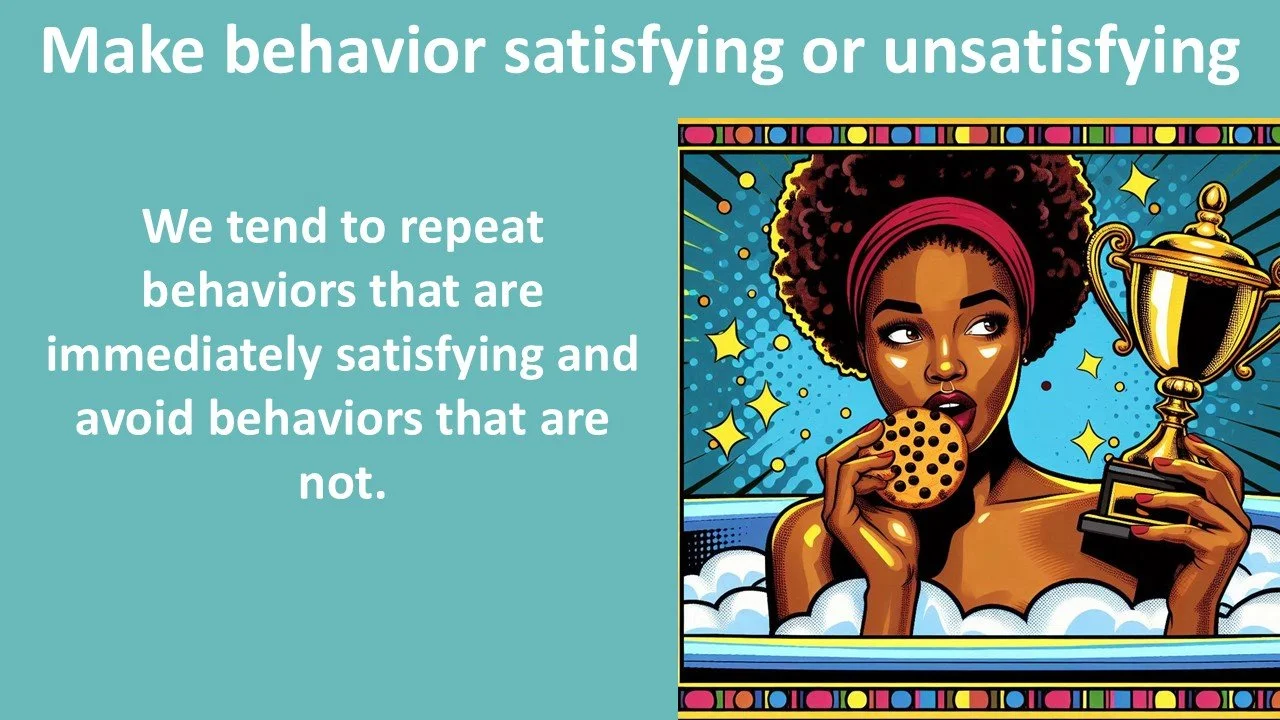
Make behavior satisfying or unsatisfying
We tend to repeat behaviors that are immediately satisfying and avoid behaviors that are not.

Make behavior easy or difficult
The easier it is to perform a behavior, the more likely we are to engage in it.
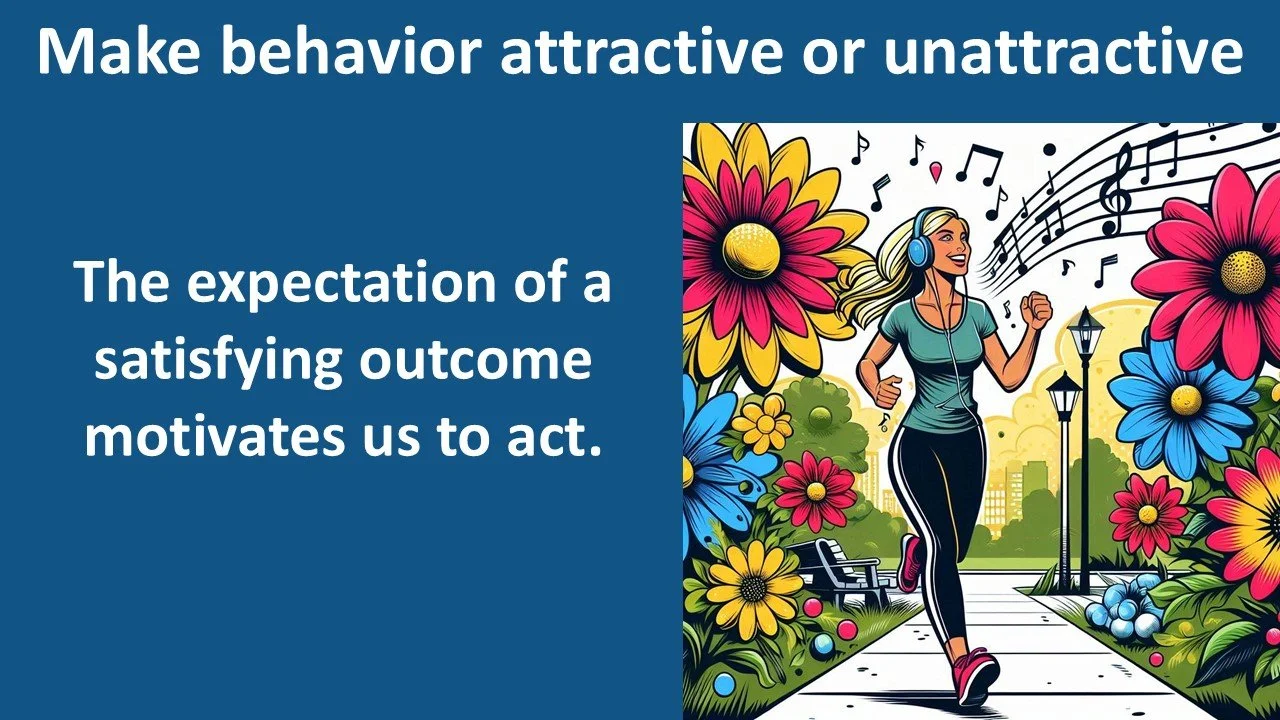
Make behavior attractive or unattractive
The expectation of a satisfying outcome motivates us to act.


Turn your behavioral plan into action
Practical strategies for achieving your desired outcomes.

Create a plan to achieve your personal goal
Develop actionable behavioral steps to reach your goal and sustain progress.

Bring your daily habits to light
Create a habits scorecard to identify hidden patterns in your daily life.

ACT: the path to a fulfilling and meaningful life
Accept your painful thoughts and feelings, be in the present moment and take values-based action.

Biases: why you are not as rational as you like to think
Because of our cognitive biases we tend to make systematic errors in our thinking.

Loss aversion: taming the fear of loss for smarter decisions
We tend to be more driven to avoid losses than to achieve gains.

Optimism bias: navigating the pitfalls of unrealistic optimism
Optimism bias can cause us to make decisions based on unrealistically optimistic expectations.

Hindsight bias: Why we think we knew it all along
It is difficult for our minds to reconstruct our previous beliefs.

The anchoring effect: The power of initial values
We tend to make estimates that stay close to the first proposed value.

Design three paths for the next five years
How to design three significantly different life paths for the next five years of your life, and select one.