
Articles
for general educational purposes only


What advice would you give a friend in this situation?
Gain clarity by seeing your decision as a friend would.
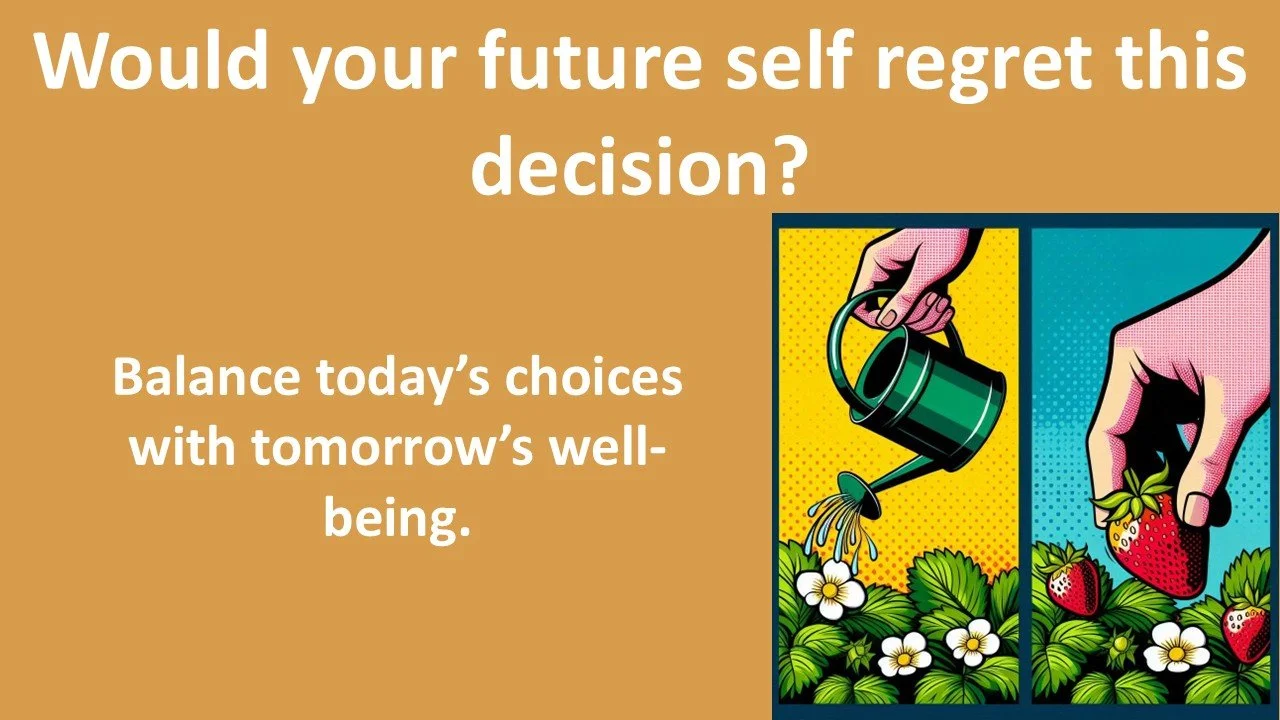
Would your future self regret this decision?
Balance today’s choices with tomorrow’s well-being.

What crucial details are you overlooking?
Make better decisions by spotting what’s missing.

How do you know this is true?
Challenge what you believe to be true, especially when it matters most.

Assessing the importance of situations and decisions
Determine what truly matters and what doesn’t.

Challenge assumptions
Improve your judgments by questioning the unverified beliefs influencing them.

Maximize your productivity using the Eisenhower Matrix
Find out how to eliminate non-essential tasks and focus on what matters.


How to have fewer regrets in life
Transform your regrets into committed actions that align with what truly matters to you.

The power of incentives and their effects
An incentive motivates people to perform behaviour that they would not do without that incentive.

The peak-end rule: The remembering self trumps the experiencing self
We tend to judge past experiences mainly based on how we felt at the emotional peak and the end.

The sunk cost fallacy: Breaking free from the grip of irrecoverable past investments
We tend to let irrecoverable past investments influence our decisions, resulting in suboptimal outcomes.

Influence: The seven principles of persuasion
Understanding the power of persuasion principles and techniques.

The unity principle: Harnessing the power of our tribal instincts
We tend to favour those we consider to be one of us.

The consistency principle: Why you should be cautious agreeing to small requests
We tend to behave consistently with what we have said or done before.

The scarcity principle: Limited availability increases perceived value
We tend to assign more value to things that are perceived as scarce.

Present bias: The present self trumps the future self
We tend to prefer immediate rewards at the expense of future rewards.

The authority principle: The dangers of blindly trusting authority figures
We tend to comply with requests from people in positions of authority.

The social proof principle: The influence of others on our choices
We tend to look at the actions or beliefs of others to determine what is appropriate.