Rank your options with a decision matrix
A simple way to compare options.
Struggling to choose between options? A decision matrix makes it clear how they compare and rank.
✳️✳️✳️
If you face a choice between multiple options, a decision matrix can help you compare and rank them. Options can include ideas, projects, approaches, or any alternatives you’re considering. The matrix uses two axes to evaluate options against the two aspects you find most important. For example, you might rate ideas on ease of implementation (low to high) and contribution to your goal (low to high). Other aspects you could consider include positive side effects for yourself or others, cost, effort, alignment with your values, or personal appeal.
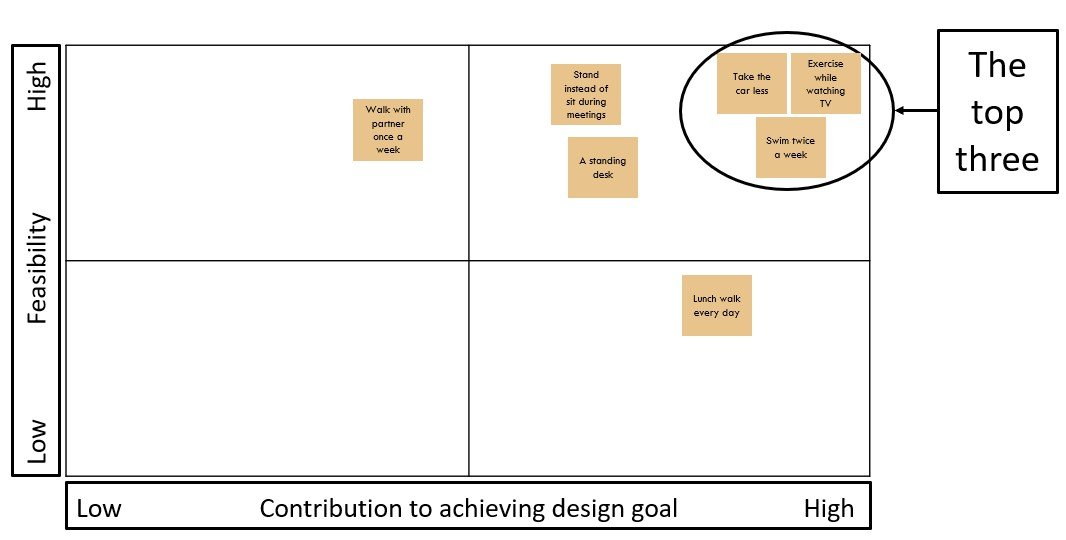
Let’s say that in a life design exercise, you end up with seven ideas for the design question: How can I get enough exercise every week? You want to assess them against feasibility and contribution to achieving your design goal, but you’re stuck because choosing from seven options at once is difficult.
Draw up a decision matrix by assigning one aspect to the horizontal axis and the other to the vertical axis. Place the low end of each aspect at the bottom left, and the high ends at either the top of the vertical axis and the far right of the horizontal one. Divide the matrix into four equal quadrants, then place each idea at the point that matches your assessment on both aspects. This lets you quickly see how the ideas compare along the two aspects. Finally, choose the three ideas closest to the top-right corner.
Here is a simple example of such a decision table: